
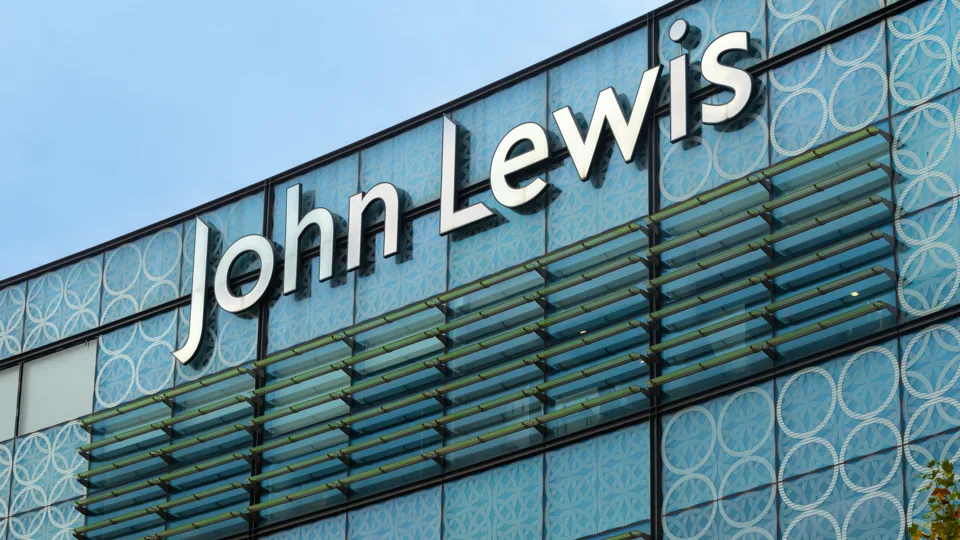
The John Lewis Partnership chair’s salary increased by 21% last year, despite the firm cutting 3,300 jobs, its annual report revealed on Wednesday (8 April).
Jason Tarry, who became the chair of John Lewis and Waitrose in September 2024, saw his annual salary increase from £990,000 to £1,132,800 during the 53 weeks to 31 January.
This compares with the £415,000 he received in the previous financial year, an amount that reflects the four months he worked after joining in September 2024 following Sharon White’s departure.
Tarry also received a £22,700 annual bonus and other benefits, bringing his total reward package to £1,257,900.
The report also showed that the firm has 65,700 staff, down from 69,000 in 2025. A John Lewis spokesperson told HR magazine that this decline was primarily through natural attrition and 0.5% of leavers were through redundancy.
It is easy to be over-simplistic when making pay comparisons between executive pay and employee salaries, stated organisational consultant Claudia De Silva. She said these are usually different roles performing entirely different functions, and that strategic decisions made at executive level can shape an organisation’s trajectory for years.
The difficulty in a situation like this is how it is perceived across the workforce, said Roy Magara, solicitor advocate and founder of Magara Law. He noted that when a business is reducing headcount on a large scale while increasing executive pay, employees are unlikely to focus on the technical justification.
Aggie Yemurai Mutuma, CEO of Mahogany Inclusion Partners, said these stories naturally prompt questions, particularly when changes to executive pay sit alongside difficult workforce decisions, and that leaders need to recognise that response with care and humility. She added that boards and leadership teams need to be clear about the rationale and how pay outcomes connect to the organisation’s broader performance and future direction.
Jo Mackie, employment partner at Michelmores, said that in a time of economic uncertainty and with employees concerned for their jobs, it seems tone deaf of one of the most well-known brands in the UK to increase the CEO’s salary so disproportionately.
De Silva stressed there is also a legitimate societal debate to be had about executive pay, noting that executive remuneration should arguably be linked more explicitly to performance and outcomes — if strategic leadership justifies the pay, then outcomes should reflect it.
Mutuma stated that HR plays a vital role in supporting organisations through these periods, with clear communication, consistency of message and visible leadership all helping to maintain trust. Magara added that leadership visibility matters, and that senior figures need to engage directly, explain the reasoning behind decisions, and show accountability.
A John Lewis spokesperson said: “Jason’s salary reflects the scale and complexity of his role. What’s more, as we’ve now removed the CEO role, we’ve made a significant reduction in our total annual senior pay. We continue to focus on the customer service we’re famous for. By ensuring our Partners are in the roles where customers need them most, and investing heavily in our brands, we’ve achieved record customer satisfaction.”

Aggie Yemurai Mutuma is a multi-award-winning leadership coach, speaker, and workplace culture strategist with expertise in workplace culture and strategy.
She blends her engaging and authentic approach with her deep experience in leading organisations to empower individual, team, and organisational transformations.
Necessary cookies keep the site working. With your permission, optional cookies help Aggie Mutuma understand how the site is used.