
Glasgow staff threatened amid immigration tensions

Employees in Glasgow’s social housing sector have faced threats and intimidation as tensions over immigration have intensified. Shettleston Housing Association temporarily closed its office over staff safety concerns, while another housing association building was reportedly affected by a planned protest. Housing leaders condemned the behaviour and stressed that threats towards staff and local communities cannot be tolerated. Aggie Yemurai Mutuma, CEO of Mahogany Inclusion Partners, told HR Magazine that these incidents should not be dismissed as isolated hostility. Fear and misinformation can become embedded when organisations and leaders fail to challenge them clearly. She stressed that racism and intimidation have a profound effect on employees who may come to work fearing abuse because of who they are or how they are perceived. Employers must respond quickly and visibly when anti-immigration sentiment affects the workplace. Immediate priorities should include staff safety, meaningful support for affected colleagues and practical bystander intervention training. Aggie also called on leaders to name harmful behaviour directly and challenge misinformation, warning that silence can be interpreted as tolerance. Temporary closures may protect people during an immediate threat, but organisations must follow this with sustained work to create safe and inclusive cultures. See the Spotlight About the author Aggie Yemurai Mutuma is a multi-award-winning leadership coach, speaker, and workplace culture strategist with expertise in workplace culture and strategy. She blends her engaging and authentic approach with her deep experience in leading organisations to empower individual, team, and organisational transformations.
‘Culture debt’ and how to reset the system

John Lewis boss sees pay rise to £1.2m HR leaders rarely get asked about “culture debt.” They get asked why, weeks after a restructure, delivery feels heavier than it should. It looks like this: the new org chart goes live on Monday. By Friday, calendars are full of alignment meetings. Decisions take longer. Handoffs get messy. And in leadership forums — almost no questions. Leaders often mistake that silence for acceptance. It’s usually the opposite. It’s a signal that trust and accountability have both taken a hit. That’s culture debt: the accumulated cost of running an organisation on weakened trust and unclear accountability. The interest gets paid in friction, delay and stalled transformation. Two debts drive most of it: Trust debt — people stop believing it’s safe to speak plainly. Concerns stay off-stage until forced into formal routes. Accountability debt — nobody can confidently answer who decides, who owns the outcome, or what happens when work crosses team boundaries. Organisations compensate with meetings and slow consensus rituals that look collaborative but produce few decisions. Most restructures create these debts through two assumptions: “The strategy is clear, so alignment will follow” and “We communicated enough.” Strategy points to a destination; communication explains intent. Neither replaces the operating system needed to execute. Without designed decision rights, incentives, and handoffs, more messaging creates fatigue — not confidence. Early symptoms to watch for: Absence of questions and challenge in forums Teams retreating into silos; cross-functional work becoming expensive Concerns surfacing via ER issues, policy disputes, or whistleblowing channels Proliferating meetings with no increase in clarity Culture debt isn’t a morale problem — it’s an execution problem. Trust debt slows the flow of reality. Accountability debt slows the flow of work. What should HR leaders do? Treat the reset like operating model work, not a culture campaign: Rebuild trust through observable actions — close loops publicly: what was raised, what changed, what didn’t, and why. Reset decision rights explicitly — define who decides, who contributes, who must be consulted, and what happens when decisions stall. Align incentives to the new system — stop rewarding only local optimisation if the restructure depends on cross-functional delivery. Equip managers to treat dissent as data — give them better defaults: “Say more.” “What are we missing?” “What would make this workable?” Fix the seams where handoffs break — name owners on both sides and define what good looks like at handoff. Measure over 30–90 days: Challenge rate in key forums Decision cycle time Decision rework rate Handoff failure rate Decision yield of cross-functional meetings “One diagnostic cuts through everything: where does uncomfortable truth go, and what happens to the person who brings it?” See the Spotlight About the author Aggie Yemurai Mutuma is a multi-award-winning leadership coach, speaker, and workplace culture strategist with expertise in workplace culture and strategy. She blends her engaging and authentic approach with her deep experience in leading organisations to empower individual, team, and organisational transformations.
John Lewis boss sees pay rise to £1.2m
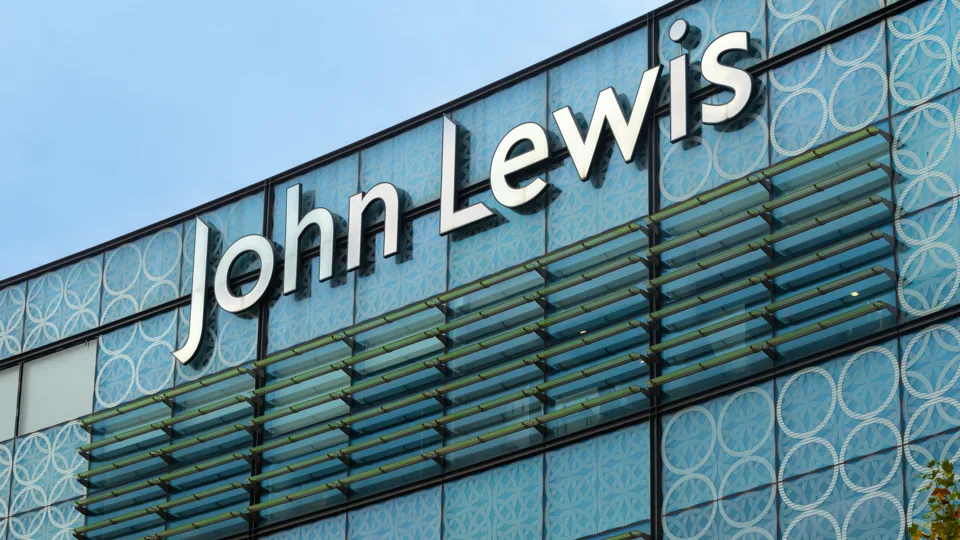
The importance of surfacing risk early – and how to encourage it The John Lewis Partnership chair’s salary increased by 21% last year, despite the firm cutting 3,300 jobs, its annual report revealed on Wednesday (8 April). Jason Tarry, who became the chair of John Lewis and Waitrose in September 2024, saw his annual salary increase from £990,000 to £1,132,800 during the 53 weeks to 31 January. This compares with the £415,000 he received in the previous financial year, an amount that reflects the four months he worked after joining in September 2024 following Sharon White’s departure. Tarry also received a £22,700 annual bonus and other benefits, bringing his total reward package to £1,257,900. The report also showed that the firm has 65,700 staff, down from 69,000 in 2025. A John Lewis spokesperson told HR magazine that this decline was primarily through natural attrition and 0.5% of leavers were through redundancy. It is easy to be over-simplistic when making pay comparisons between executive pay and employee salaries, stated organisational consultant Claudia De Silva. She said these are usually different roles performing entirely different functions, and that strategic decisions made at executive level can shape an organisation’s trajectory for years. The difficulty in a situation like this is how it is perceived across the workforce, said Roy Magara, solicitor advocate and founder of Magara Law. He noted that when a business is reducing headcount on a large scale while increasing executive pay, employees are unlikely to focus on the technical justification. Aggie Yemurai Mutuma, CEO of Mahogany Inclusion Partners, said these stories naturally prompt questions, particularly when changes to executive pay sit alongside difficult workforce decisions, and that leaders need to recognise that response with care and humility. She added that boards and leadership teams need to be clear about the rationale and how pay outcomes connect to the organisation’s broader performance and future direction. Jo Mackie, employment partner at Michelmores, said that in a time of economic uncertainty and with employees concerned for their jobs, it seems tone deaf of one of the most well-known brands in the UK to increase the CEO’s salary so disproportionately. De Silva stressed there is also a legitimate societal debate to be had about executive pay, noting that executive remuneration should arguably be linked more explicitly to performance and outcomes — if strategic leadership justifies the pay, then outcomes should reflect it. Mutuma stated that HR plays a vital role in supporting organisations through these periods, with clear communication, consistency of message and visible leadership all helping to maintain trust. Magara added that leadership visibility matters, and that senior figures need to engage directly, explain the reasoning behind decisions, and show accountability. A John Lewis spokesperson said: “Jason’s salary reflects the scale and complexity of his role. What’s more, as we’ve now removed the CEO role, we’ve made a significant reduction in our total annual senior pay. We continue to focus on the customer service we’re famous for. By ensuring our Partners are in the roles where customers need them most, and investing heavily in our brands, we’ve achieved record customer satisfaction.” See the Spotlight About the author Aggie Yemurai Mutuma is a multi-award-winning leadership coach, speaker, and workplace culture strategist with expertise in workplace culture and strategy. She blends her engaging and authentic approach with her deep experience in leading organisations to empower individual, team, and organisational transformations.
The importance of surfacing risk early – and how to encourage it
Aggie’s guest Writing Inclusive hiring hits highest point since 2022, data shows Aggie’s guest Writing Inclusive hiring hits highest point since 2022, data shows Aggie’s guest Writing Inclusive hiring hits highest point since 2022, data shows Aggie’s guest Writing Inclusive hiring hits highest point since 2022, data shows Purpose without equity is just optics In the article from People Management research by the Recruitment & Employment Confederation (REC) found that 51 % of UK employers now use diverse interview panels and 34 % have adopted name-blind CV screening—both marks up significantly on last year—while 48 % are working to diversify shortlists. The survey highlights that inclusive recruitment practices are increasingly viewed as strategic imperatives in the face of talent- and skills-shortages, rather than optional “woke” add-ons. See the Spotlight About the author Aggie Yemurai Mutuma is a multi-award-winning leadership coach, speaker, and workplace culture strategist with expertise in workplace culture and strategy. She blends her engaging and authentic approach with her deep experience in leading organisations to empower individual, team, and organisational transformations.
Aggie’s guest Writing

Over half of UK adults want social mobility in workplace DEI In the article from HR Magazine titled “Over half of UK adults want social mobility in workplace DEI,” research commissioned by The Co‑operative Group found that 52 % of UK adults believe that organisations should make social mobility a core component of their diversity, equity and inclusion (DEI) strategy. The survey highlighted that background attributes such as accent, family income and schooling still significantly affect career opportunities, indicating a public expectation that employers act to level the playing field. The piece echoes the view of Kirsten Barnes (CEO of Bright Network), who urges embedding social mobility into DEI efforts via early engagement, mentoring and inclusive access initiatives. Source: https://www.hrmagazine.co.uk/content/news/over-half-of-uk-adults-want-social-mobility-in-workplace-dei
‘Like dominoes falling’: what does City regulators’ U-turn on new EDI rules mean for inclusion in the UK?

‘Like dominoes falling’: what does City regulators’ U-turn on new EDI rules mean for inclusion in the UK? In the People Management article ‘Like dominoes falling’: what does City regulators’ U-turn on new EDI rules mean for inclusion in the UK?, the decisions made by the Financial Conduct Authority (FAC) and the Prudential Regulation Authority (PRA) to suspend the enforcement of new rules on diversity and inclusion are explored. Aggie Yemurai Mutuma, CEO of Mahogany Inclusion Partners, shared these thoughts on this change of heart, pointing out that it could be a setback for equality strategies in the UK financial services industry. To see the full analysis of how these regulatory changes affect broader inclusion efforts, please read on. See the Spotlight About the author Aggie Yemurai Mutuma is a multi-award-winning leadership coach, speaker, and workplace culture strategist with expertise in workplace culture and strategy. She blends her engaging and authentic approach with her deep experience in leading organisations to empower individual, team, and organisational transformations.
‘We Value Our People’ – Prove It or Lose Them

‘We Value Our People’ – Prove It or Lose Them In the HR Director article, Aggie Mutuma, CEO of Mahogany Inclusion Partners, emphasises that organizations must move beyond mere slogans about valuing employees and instead demonstrate genuine commitment through authentic Employee Value Propositions (EVPs). She identifies five key pillars of an effective EVP: authenticity, belonging and inclusion, career growth and development, wellbeing and work-life balance, and purpose and meaningful work.Mutuma argues that without these elements, organizations risk losing top talent. She urges leaders to audit their EVPs, prioritize inclusion and equity, invest in career development, foster a culture of wellbeing, and ensure impactful communication. By doing so, companies can create a workplace where employees feel truly valued and engaged. See the Spotlight About the author Aggie Yemurai Mutuma is a multi-award-winning leadership coach, speaker, and workplace culture strategist with expertise in workplace culture and strategy. She blends her engaging and authentic approach with her deep experience in leading organisations to empower individual, team, and organisational transformations.
Nearly half of workers have experienced workplace discrimination, study findsWomen 1.5 times more likely than men to earn low wages, report findsNearly half of workers have experienced workplace discrimination, study finds

Nearly half of workers have experienced workplace discrimination, study findsWomen 1.5 times more likely than men to earn low wages, report findsNearly half of workers have experienced workplace discrimination, study finds In the People Management article, Aggie Mutuma highlights the gender pay gap that persists, and the systemic barriers that have and continue to place women in lower paying jobs. She points out the issue of occupational segregation and the inability to get into higher paying positions and are often in low paying ones and that organizations have to work to ensure that there are equal and fair pay. Mutuma suggests that these issues should be addressed by businesses through the inclusion of policies and practices that support equal wages. Click the link to read Aggie’s recommendations on how to close the gender pay gap and create a fair workplace. See the Spotlight About the author Aggie Yemurai Mutuma is a multi-award-winning leadership coach, speaker, and workplace culture strategist with expertise in workplace culture and strategy. She blends her engaging and authentic approach with her deep experience in leading organisations to empower individual, team, and organisational transformations.
How will Trump’s anti-DEI policies affect programmes in the UK?

How will Trump’s anti-DEI policies affect programmes in the UK? US President Donald Trump used executive orders to scrap his predecessor Joe Biden’s order that all federal agencies have to come up with equity plans. Trump has also ended diversity, equity and inclusion (DEI) activities in the federal governments. Trump ordered all US government staff working on DEI schemes to be put on immediate paid administrative leave. Toby Mildon, founder of inclusion consultancy Mildon, said that the move was likely to cause companies outside of the US to reconsider their DEI programmes. He told HR magazine: “While some organisations might feel pressure to reconsider DEI efforts, those committed to equity and inclusion recognise this as a moment to act decisively.” However, Hanna Naima McCloskey, founder of DEI solutions agency Fearless Future, said that UK employers have no reason for amending their DEI strategies at this time, except to strengthen them by making them more ambitious and evidence-based. “The US legal terrain has no jurisdiction anywhere else in the world. In any case, a one-size-fits-all approach to DEI is always best avoided,” she told HR magazine. She added: “We advocate a ‘build global, think local’ approach to DEI, one that attends to regional specificities. This is both an effective method and a defensive approach when it comes to delinking US ripples from efforts elsewhere in the world.” Trump’s measures do not yet affect private companies, but he has asked the US attorney general’s office to give recommendations to encourage the private sector to “end illegal discrimination and preferences, including DEI”. The CIPD commented on Trump’s decisions during a statement from chief executive Peter Cheese, published on LinkedIn. Cheese said that DEI has become “increasingly politicised and fragmented”. Cheese said: “This is a time and opportunity to reflect on progress, and evidence for DEI initiatives emphasising relevance, actionability, and outcomes.” Trump’s efforts could bolster DEI critics globally, said Darain Faraz, co-founder of People Like Us, a non-profit that supports ethnically diverse communications professionals. Speaking to HR magazine, she said: “The decision to dismantle federal DEI programmes in the US is a stark reminder of how fragile progress can be when equity is politicised. While this move directly affects US workers, its ripple effects will be felt globally, including in the UK. “Many organisations take cues from US corporations. The danger is that this rollback could embolden critics here to undermine vital DEI efforts.” But inclusion at work has a strong grounding in employment law and will not be easily eradicated in the UK, according to Aggie Yemurai Mutuma, CEO of inclusion consultancy Mahogany Partners. “While this will undoubtedly have an impact in the UK, the commitment to diversity and inclusion remains strong, supported by robust legal frameworks and societal values,” she told HR magazine. “The incoming Employment Rights Bill emphasises the importance of creating safe and inclusive workplaces, and we have the recent focus on preventing sexual harassment. This legislative direction underscores the requirement for organisations to adopt proactive measures to prevent harassment and foster a culture of respect and inclusion.” Mutuma said that although the US decision is a setback, it serves as a reminder of the ongoing work needed to advance DEI globally. “HR leaders in the UK should reaffirm their commitment to DEI by leveraging data to showcase its positive impact on organisational outcomes and employee engagement,” she said. “Engaging senior leadership as advocates and providing education to dispel misconceptions about DEI are crucial steps in maintaining momentum.” Mildon added that employers should consider how the US mandates may affect their people: “For example, transgender and non-binary employees may feel particularly unsettled. “Meaningful actions, like asking how to support transitioning coworkers, using chosen names and pronouns, and checking in with care, can foster safety and inclusion. These small gestures build trust and show solidarity.” He also emphasised the importance of including everyone in DEI efforts: “A misconception I hear is that ‘middle-aged, straight, white men’ are excluded from diversity. This couldn’t be further from the truth. “Think of diversity as an iceberg: visible characteristics – like a physical disability or skin colour – are just the tip. Beneath the surface are the hidden aspects of who we are: social class, growing up in a rural area, being introverted, or having different life experiences. “The goal is to respect those differences and harness them to create inclusive cultures that value lived experiences.” Model behaviour Leaders play a pivotal role in setting the tone for inclusion. By prioritising the correct use of names, they signal to everyone that this is an essential aspect of the company’s values. Leaders should model this behaviour by making a concerted effort to learn and use names correctly, thereby encouraging others to follow suit. Aggie Yemurai Mutuma is CEO of Mahogany Inclusion Partners Love See the Spotlight About the author Aggie Yemurai Mutuma is a multi-award-winning leadership coach, speaker, and workplace culture strategist with expertise in workplace culture and strategy. She blends her engaging and authentic approach with her deep experience in leading organisations to empower individual, team, and organisational transformations.
‘Structural racism in action’: one in six ethnic minority workers in insecure jobs, TUC analysis shows

‘Structural racism in action’: one in six ethnic minority workers in insecure jobs, TUC analysis shows In the People Management article, Aggie Mutuma addresses the issue of structural racism in the workplace, highlighting how systemic barriers continue to hinder BME workers, often confining them to insecure and low-paid jobs. She emphasizes the need for mandatory ethnicity pay gap reporting and inclusive hiring practices to dismantle these barriers. Click the link to explore Aggie’s insights on fostering equality and stability for BME workers. Love See the Spotlight About the author Aggie Yemurai Mutuma is a multi-award-winning leadership coach, speaker, and workplace culture strategist with expertise in workplace culture and strategy. She blends her engaging and authentic approach with her deep experience in leading organisations to empower individual, team, and organisational transformations.