Glasgow staff threatened amid immigration tensions

Employees in Glasgow’s social housing sector have faced threats and intimidation as tensions over immigration have intensified. Shettleston Housing Association temporarily closed its office over staff safety concerns, while another housing association building was reportedly affected by a planned protest. Housing leaders condemned the behaviour and stressed that threats towards staff and local communities cannot be tolerated. Aggie Yemurai Mutuma, CEO of Mahogany Inclusion Partners, told HR Magazine that these incidents should not be dismissed as isolated hostility. Fear and misinformation can become embedded when organisations and leaders fail to challenge them clearly. She stressed that racism and intimidation have a profound effect on employees who may come to work fearing abuse because of who they are or how they are perceived. Employers must respond quickly and visibly when anti-immigration sentiment affects the workplace. Immediate priorities should include staff safety, meaningful support for affected colleagues and practical bystander intervention training. Aggie also called on leaders to name harmful behaviour directly and challenge misinformation, warning that silence can be interpreted as tolerance. Temporary closures may protect people during an immediate threat, but organisations must follow this with sustained work to create safe and inclusive cultures. See the Spotlight About the author Aggie Yemurai Mutuma is a multi-award-winning leadership coach, speaker, and workplace culture strategist with expertise in workplace culture and strategy. She blends her engaging and authentic approach with her deep experience in leading organisations to empower individual, team, and organisational transformations.
‘Culture debt’ and how to reset the system

John Lewis boss sees pay rise to £1.2m HR leaders rarely get asked about “culture debt.” They get asked why, weeks after a restructure, delivery feels heavier than it should. It looks like this: the new org chart goes live on Monday. By Friday, calendars are full of alignment meetings. Decisions take longer. Handoffs get messy. And in leadership forums — almost no questions. Leaders often mistake that silence for acceptance. It’s usually the opposite. It’s a signal that trust and accountability have both taken a hit. That’s culture debt: the accumulated cost of running an organisation on weakened trust and unclear accountability. The interest gets paid in friction, delay and stalled transformation. Two debts drive most of it: Trust debt — people stop believing it’s safe to speak plainly. Concerns stay off-stage until forced into formal routes. Accountability debt — nobody can confidently answer who decides, who owns the outcome, or what happens when work crosses team boundaries. Organisations compensate with meetings and slow consensus rituals that look collaborative but produce few decisions. Most restructures create these debts through two assumptions: “The strategy is clear, so alignment will follow” and “We communicated enough.” Strategy points to a destination; communication explains intent. Neither replaces the operating system needed to execute. Without designed decision rights, incentives, and handoffs, more messaging creates fatigue — not confidence. Early symptoms to watch for: Absence of questions and challenge in forums Teams retreating into silos; cross-functional work becoming expensive Concerns surfacing via ER issues, policy disputes, or whistleblowing channels Proliferating meetings with no increase in clarity Culture debt isn’t a morale problem — it’s an execution problem. Trust debt slows the flow of reality. Accountability debt slows the flow of work. What should HR leaders do? Treat the reset like operating model work, not a culture campaign: Rebuild trust through observable actions — close loops publicly: what was raised, what changed, what didn’t, and why. Reset decision rights explicitly — define who decides, who contributes, who must be consulted, and what happens when decisions stall. Align incentives to the new system — stop rewarding only local optimisation if the restructure depends on cross-functional delivery. Equip managers to treat dissent as data — give them better defaults: “Say more.” “What are we missing?” “What would make this workable?” Fix the seams where handoffs break — name owners on both sides and define what good looks like at handoff. Measure over 30–90 days: Challenge rate in key forums Decision cycle time Decision rework rate Handoff failure rate Decision yield of cross-functional meetings “One diagnostic cuts through everything: where does uncomfortable truth go, and what happens to the person who brings it?” See the Spotlight About the author Aggie Yemurai Mutuma is a multi-award-winning leadership coach, speaker, and workplace culture strategist with expertise in workplace culture and strategy. She blends her engaging and authentic approach with her deep experience in leading organisations to empower individual, team, and organisational transformations.
John Lewis boss sees pay rise to £1.2m
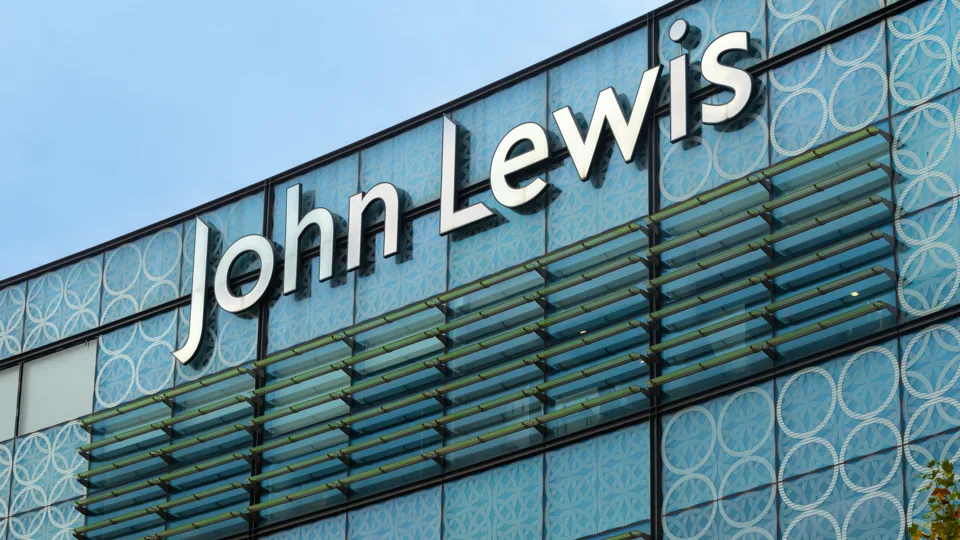
The importance of surfacing risk early – and how to encourage it The John Lewis Partnership chair’s salary increased by 21% last year, despite the firm cutting 3,300 jobs, its annual report revealed on Wednesday (8 April). Jason Tarry, who became the chair of John Lewis and Waitrose in September 2024, saw his annual salary increase from £990,000 to £1,132,800 during the 53 weeks to 31 January. This compares with the £415,000 he received in the previous financial year, an amount that reflects the four months he worked after joining in September 2024 following Sharon White’s departure. Tarry also received a £22,700 annual bonus and other benefits, bringing his total reward package to £1,257,900. The report also showed that the firm has 65,700 staff, down from 69,000 in 2025. A John Lewis spokesperson told HR magazine that this decline was primarily through natural attrition and 0.5% of leavers were through redundancy. It is easy to be over-simplistic when making pay comparisons between executive pay and employee salaries, stated organisational consultant Claudia De Silva. She said these are usually different roles performing entirely different functions, and that strategic decisions made at executive level can shape an organisation’s trajectory for years. The difficulty in a situation like this is how it is perceived across the workforce, said Roy Magara, solicitor advocate and founder of Magara Law. He noted that when a business is reducing headcount on a large scale while increasing executive pay, employees are unlikely to focus on the technical justification. Aggie Yemurai Mutuma, CEO of Mahogany Inclusion Partners, said these stories naturally prompt questions, particularly when changes to executive pay sit alongside difficult workforce decisions, and that leaders need to recognise that response with care and humility. She added that boards and leadership teams need to be clear about the rationale and how pay outcomes connect to the organisation’s broader performance and future direction. Jo Mackie, employment partner at Michelmores, said that in a time of economic uncertainty and with employees concerned for their jobs, it seems tone deaf of one of the most well-known brands in the UK to increase the CEO’s salary so disproportionately. De Silva stressed there is also a legitimate societal debate to be had about executive pay, noting that executive remuneration should arguably be linked more explicitly to performance and outcomes — if strategic leadership justifies the pay, then outcomes should reflect it. Mutuma stated that HR plays a vital role in supporting organisations through these periods, with clear communication, consistency of message and visible leadership all helping to maintain trust. Magara added that leadership visibility matters, and that senior figures need to engage directly, explain the reasoning behind decisions, and show accountability. A John Lewis spokesperson said: “Jason’s salary reflects the scale and complexity of his role. What’s more, as we’ve now removed the CEO role, we’ve made a significant reduction in our total annual senior pay. We continue to focus on the customer service we’re famous for. By ensuring our Partners are in the roles where customers need them most, and investing heavily in our brands, we’ve achieved record customer satisfaction.” See the Spotlight About the author Aggie Yemurai Mutuma is a multi-award-winning leadership coach, speaker, and workplace culture strategist with expertise in workplace culture and strategy. She blends her engaging and authentic approach with her deep experience in leading organisations to empower individual, team, and organisational transformations.
The importance of surfacing risk early – and how to encourage it
Aggie’s guest Writing Inclusive hiring hits highest point since 2022, data shows Aggie’s guest Writing Inclusive hiring hits highest point since 2022, data shows Aggie’s guest Writing Inclusive hiring hits highest point since 2022, data shows Aggie’s guest Writing Inclusive hiring hits highest point since 2022, data shows Purpose without equity is just optics In the article from People Management research by the Recruitment & Employment Confederation (REC) found that 51 % of UK employers now use diverse interview panels and 34 % have adopted name-blind CV screening—both marks up significantly on last year—while 48 % are working to diversify shortlists. The survey highlights that inclusive recruitment practices are increasingly viewed as strategic imperatives in the face of talent- and skills-shortages, rather than optional “woke” add-ons. See the Spotlight About the author Aggie Yemurai Mutuma is a multi-award-winning leadership coach, speaker, and workplace culture strategist with expertise in workplace culture and strategy. She blends her engaging and authentic approach with her deep experience in leading organisations to empower individual, team, and organisational transformations.
Inclusive hiring hits highest point since 2022, data shows

Aggie’s guest Writing Inclusive hiring hits highest point since 2022, data shows Aggie’s guest Writing Inclusive hiring hits highest point since 2022, data shows Aggie’s guest Writing Inclusive hiring hits highest point since 2022, data shows Aggie’s guest Writing Inclusive hiring hits highest point since 2022, data shows Purpose without equity is just optics In the article from People Management research by the Recruitment & Employment Confederation (REC) found that 51 % of UK employers now use diverse interview panels and 34 % have adopted name-blind CV screening—both marks up significantly on last year—while 48 % are working to diversify shortlists. The survey highlights that inclusive recruitment practices are increasingly viewed as strategic imperatives in the face of talent- and skills-shortages, rather than optional “woke” add-ons. See the Spotlight About the author Aggie Yemurai Mutuma is a multi-award-winning leadership coach, speaker, and workplace culture strategist with expertise in workplace culture and strategy. She blends her engaging and authentic approach with her deep experience in leading organisations to empower individual, team, and organisational transformations.
Purpose without equity is just optics

Purpose without equity is just optics In the HR Director article ‘Purpose without equity is just optics’, Aggie Yemurai Mutuma, CEO of Mahogany Inclusion Partners, argues that organisational purpose statements are meaningless without genuine equity at their core. Drawing on her expertise in inclusive leadership and culture, Mutuma highlights the growing disconnect between public DEI commitments and lived employee experiences, warning that performative purpose erodes trust and engagement. She stresses that equity must underpin access to opportunities, influence, and support—and that true belonging boosts innovation, resilience, and performance. To explore Mutuma’s full perspective on embedding equity into purpose, please read on. See the Spotlight About the author Aggie Yemurai Mutuma is a multi-award-winning leadership coach, speaker, and workplace culture strategist with expertise in workplace culture and strategy. She blends her engaging and authentic approach with her deep experience in leading organisations to empower individual, team, and organisational transformations.
Diversity | Inclusion Works – and It’s Time We Stopped Asking If It Does

Diversity | Inclusion Works – and It’s Time We Stopped Asking If It Does In the HR Grapevine article ‘Inclusion works – it’s time we stopped asking if it does’, Aggie Yemurai Mutuma, CEO of Mahogany Inclusion Partners, makes a compelling case for moving beyond questioning whether inclusion delivers value to focusing on implementation. Drawing from her extensive experience in leadership, equity and culture, Mutuma argues that inclusion isn’t a “nice-to-have” but rather a performance driver and human imperative that should be infused throughout every aspect of organizational operations. She emphasizes that exclusion poses the real risk to businesses, highlighting how inclusive management requires proper organizational support and that belonging directly boosts performance by creating conditions where employees can thrive and contribute their best work. To explore Mutuma’s full insights on transforming inclusion from intention to action, please read on. See the Spotlight About the author Aggie Yemurai Mutuma is a multi-award-winning leadership coach, speaker, and workplace culture strategist with expertise in workplace culture and strategy. She blends her engaging and authentic approach with her deep experience in leading organisations to empower individual, team, and organisational transformations.
Nearly half of workers have experienced workplace discrimination, study finds

Nearly half of workers have experienced workplace discrimination, study finds More than two in five (45 per cent) UK adults have encountered discrimination either in the workplace or during their job search, while 39 per cent believe they were rejected from a role for discriminatory reasons, a survey has found. The survey by Ciphr of 4,000 UK adults also found women were almost twice as likely to report discrimination than men; one in 10 (10 per cent) women felt they had lost out on a role because of their gender, compared to 5.2 per cent of men. Aggie Mutuma, CEO of Mahogany Inclusion Partners, said the findings reinforced what “too many people already know from experience” – that “workplace discrimination isn’t an occasional misstep, it’s a pattern that continues to shape careers, opportunities and workplace culture”. Will we ever weed out workplace discrimination? Experts respond to report highlighting ‘pervasive problem’ Workplace discrimination against young women hits three-year high, study shows Belief vs reality in discrimination cases “The fact that so many individuals feel they’ve been overlooked, undervalued or even excluded entirely because of their identity is a red flag for organisations that claim to be inclusive,” she added. Paul Sesay, founder and CEO of Inclusive Companies, said there was a “direct correlation between difficulties in diverse hiring and discrimination at interview stage and within the workplace”. “Even if diverse hires are made, underrepresentation, lack of training and education among colleagues and bias across a business will, ultimately, see the diverse hire fail because of the lack of inclusion and equity,” he told People Management. The widespread impact of ageism The most common form of discrimination found by the survey was ageism, with 15 per cent of people feeling their age prevented them from securing a job. One in five (19 per cent) said they had faced ageism at some point in their careers. Almost three in five (57 per cent) of those aged 18 to 34 said they had experienced discrimination at work, with a similar percentage (59 per cent) facing hiring discrimination. In comparison, 31 per cent of those aged 35 and older said they had experienced discrimination. Discrimination against parents or carers was also prevalent, with an average 11 per cent saying they had been treated unfairly because of caregiving responsibilities. For those who were caring for a dependent child as well as older or disabled relatives, nearly a third (30 per cent) felt they had been subjected to discrimination. Emily Andrews, deputy director for work at the Centre for Ageing Better, said ageism was “damaging for individuals, employers and the economy”. “Ageism is the prejudice that is hidden in plain sight. It’s so embedded in our society that it’s even become normalised and passively accepted by those of us who are older,” she explained. “It’s also short sighted of businesses to deprive themselves of all the advantages that having older workers and a multigenerational workforce brings when combining skills, knowledge and experience.” Sesay said marginalising older colleagues would see “an organisation lose their highly valuable knowledge, wisdom, experience and loyalty”. “The human cost is immeasurable as older people lose their sense of self worth and lose out on income and pension contributions if they feel the need to reduce or end their working hours,” he added. Caroline Abrahams, charity director at Age UK, said a person’s work should be based on their “skills and motivation and not how they look or their birth certificate”. “For most people there is no evidence that their ability to do their job declines with age. There are many older people with a lifetime of valuable skills who would relish the prospect of staying in employment longer and we hope that employers recognise the fantastic and often underused skills base of older workers,” she told People Management. Discrimination and racism at work The research found that workplace discrimination disproportionately affected employees with ethnic minority backgrounds. Three quarters (76 per cent) of respondents identifying as Black, Black British, Caribbean or African reported experiencing discrimination at work and/or as a job applicant. Similarly, two thirds (65 per cent) of individuals from Asian or Asian British backgrounds also said they had encountered discrimination in professional settings. Furthermore, two in five (39 per cent) Black respondents and nearly a third (31 per cent) of Asian people said they had experienced racism or discrimination based on their ethnicity. In comparison, 5.2 per cent of white people felt they had experienced discrimination based on ethnicity. “Discrimination will stop diverse talent in its tracks,” said Sesay. “Excellent colleagues will be lost if their environment doesn’t welcome or include them. And the problem will persist until the culture changes.” Mutuma explained that discrimination was not always “overt bias” but could build up as the “quiet, accumulative impact of microaggressions, exclusion from key projects or the ‘not the right fit’ excuse used to justify missed promotions”. What should employers do? Mutuma urged businesses to “move beyond awareness and into action” if they were serious about tackling discrimination. “This starts with honest conversations at the top – where are the blind spots in recruitment? How are promotions really being decided? Do leaders create space for diverse voices, or just expect them to conform? Training is useful, but only when paired with accountability, psychological safety and policies that are enforced rather than just written down,” she said. “The real challenge for businesses isn’t acknowledging that it exists – it’s deciding whether they’re willing to be part of the solution.” Sesay added that managers must be aware discrimination was “not always loud or easy to spot”. “Invest in training for leaders on inclusive management practices, encourage them to value diverse perspectives and create a culture of respect. Introduce mandatory diversity and inclusion training for all employees to explain unconscious bias, cultural sensitivity and inclusive communication. Ensure this is part of every new colleague’s onboarding process to build a strong, resilient and respectful culture from the ground up,” he advised. See the Spotlight About the author Aggie Yemurai Mutuma
Navigating political change: Supporting employee wellbeing in uncertain times

Navigating political change: Supporting employee wellbeing in uncertain times Political shifts ripple into workplaces, all over the world, shaping employee morale and wellbeing. As anti-DEI rhetoric gains traction in some regions and shifting policies create uncertainty, many employees – especially those from underrepresented backgrounds – are feeling more anxious, less secure, and increasingly disengaged. What should leaders be doing? Political shifts don’t just play out in government halls or on news channels – they ripple into workplaces, all over the world, shaping employee morale and wellbeing. As anti-DEI rhetoric gains traction in some regions and shifting policies create uncertainty, many employees – especially those from underrepresented backgrounds – are feeling more anxious, less secure, and increasingly disengaged. There is no wellbeing without inclusion. You cannot talk about employee wellbeing without recognising the impact of exclusion, microaggressions, or the fear of stalled career progression. If employees do not feel safe, valued, or like they belong, stress levels rise, morale drops, and productivity suffers. A McKinsey study on The State of Inclusion in Organisations found that employees who feel a strong sense of inclusion report greater job satisfaction, lower stress levels, and higher engagement. When inclusion is compromised, wellbeing suffers, and organisations pay the price in decreased retention and performance. At Mahogany Inclusion Partners, we help organisations create cultures where employees feel safe, valued, and heard. As political discourse challenges the role of DEI in workplaces, HR leaders must take intentional action to protect employee wellbeing by embedding inclusion into every aspect of the employee experience. Acknowledge the political climate – Silence is not an option Avoiding the conversation does not make the impact disappear. Political shifts – especially those that challenge workplace inclusion – send strong messages to employees, shaping how safe, valued, and optimistic they feel about their future at work. HR leaders must acknowledge these realities and proactively address them. Creating space for open conversations, whether through listening sessions or leadership town halls, allows employees to voice concerns in a psychologically safe environment. Employees do not expect their organisations to take a political stance, but they do expect reassurance that their wellbeing and sense of belonging are priorities. This is easily achievable by holding safe spaces for honest, vulnerable and impactful conversations. Reaffirm inclusion – employees are watching When external rhetoric undermines DEI, organisations must be unwavering in their commitment to inclusion. Employees are looking for real action, not just corporate statements. A clear and consistent stance on inclusion is essential in maintaining trust and engagement. HR leaders should review and reinforce policies on inclusion, belonging, and psychological safety. Leadership teams must be trained to actively support diverse talent and create workplaces where all employees feel secure in their career progression and workplace experience. A proactive approach – one that does not wait for external events to force a reaction – will help organisations maintain a strong and resilient workforce. Psychological safety is non-negotiable In times of political uncertainty, employees need to feel safe speaking up, sharing concerns, and being themselves at work. This does not happen by accident – it requires leaders who are equipped to foster trust and accountability. HR teams should invest in inclusive leadership training and ensure clear mechanisms are in place for addressing bias, exclusion, and discrimination. Psychological safety means that employees can voice concerns without fear of retaliation, and leaders must model that commitment in their own behaviour. Without this foundation, even the best-intended wellbeing initiatives will fall short. Wellbeing is not one-size-fits-all Political shifts do not impact all employees equally. While some may feel unaffected, others – especially those from marginalised backgrounds – may experience heightened anxiety, fearing the rollback of DEI progress. This is a clear reminder that a one-size-fits-all approach to wellbeing will not work. Organisations must ensure that wellbeing initiatives reflect diverse employee needs, whether through Employee Resource Groups (ERGs), culturally competent mental health support, or flexible policies that allow employees to manage stress in ways that work for them. A tailored approach signals that the company truly understands and values its workforce, in its entirety, for all individuals. Action over rhetoric – real commitment matters Employees are paying attention to how organisations respond during uncertain times. DEI statements and policies must be backed by measurable actions. If an organisation is serious about supporting employee wellbeing, it must embed inclusion into every stage of the employee experience – from hiring to retention to promotion. After all, how can we expect to enhance employee wellbeing if inclusion isn’t made a priority? Companies that fail to take meaningful action risk losing talent. In a workplace where employees feel their concerns are dismissed or that inclusion is deprioritised, trust erodes, engagement declines, and retention suffers. A visible, sustained commitment to inclusion is not only the right thing to do – it is a business imperative. Creating a culture of wellbeing through inclusion When political landscapes shift, organisations have two choices: let uncertainty erode employee wellbeing, satisfaction and confidence, or proactively create a sense of belonging and stability. The best HR leaders know that wellbeing isn’t about perks or mental health days – it’s about making sure employees feel seen, valued, and safe. At Mahogany Inclusion Partners, we help organisations move beyond the buzzwords and create cultures where inclusion is embedded into every aspect of the employee experience. Because in uncertain times, the strongest workplaces are the ones where everyone belongs. See the Spotlight About the author Aggie Yemurai Mutuma is a multi-award-winning leadership coach, speaker, and workplace culture strategist with expertise in workplace culture and strategy. She blends her engaging and authentic approach with her deep experience in leading organisations to empower individual, team, and organisational transformations.
Living Authentically in a Digital World: Navigating Social Media with Integrity

Living Authentically in a Digital World: Navigating Social Media with Integrity In the digital age, where curated images and highlight reels dominate, maintaining authenticity online can be challenging. People often feel pressured to present a polished version of ourselves on social media. This can lead to inauthentic portrayals and impact our mental health and self-perception. It’s crucial to recognise these pressures and their effects on us and those around. Here are some suggestions if you want to dial down the pressure and dial up your authenticity online. Strategies for Authenticity Online: Share Genuine Experiences: Be honest about your experiences, both the highs and the lows. Authenticity resonates with others and fosters genuine connections. Set Boundaries: Limit your time on social media and curate your feed to include accounts that inspire and uplift you. Protect your mental space by unfollowing accounts that don’t align with your values. Follow Inspiring Accounts: Surround yourself with content that encourages authenticity and self-expression. Engage with communities that celebrate individuality. An authentic online presence builds trust and inspires others to embrace their true selves. It allows you to connect with like-minded individuals and create a supportive digital community. As a first step, take a moment to audit your social media habits and make conscious choices that reflect your values. Always remember, you are not alone in this journey. I invite you to reach out so we can explore what this means for you together. Or maybe just share this article with someone who you think it will help, let’s spread the love. I am sending you love and light as you embrace your true self and spread love to those around you. Love About the author Aggie Yemurai Mutuma is a multi-award-winning leadership coach, speaker, and workplace culture strategist with expertise in workplace culture and strategy. She blends her engaging and authentic approach with her deep experience in leading organisations to empower individual, team, and organisational transformations.